Now that you’ve bought a hair removal product you like, let’s talk about how to use it correctly, starting with creams.
1. How to use hair removal creams

We’ve already talked some about ‘patch’ tests before using hair removal cream, and it’s a point worth emphasizing. A patch test is just what its name implies: you choose a small amount of hair and apply cream to it to see how it works.
It’s always best to perform the patch test on a less visible part of your body, in case things go awry, and you’re left with, say, a giant red mark.
Also, it’s of utmost importance to find cream suitable for your skin type. Think about your skin’s sensitivity and where you plan to use the cream.
It’s also important to examine the area for cuts, scrapes, irritated skin, moles, sunburn, etc. before you apply the cream. This will minimize your chances of developing a rash or chemical burn.
Let your skin heal before applying hair removal cream to those areas.
- Read the directions! This is important. Make sure you read the directions carefully and follow them to the letter. Remember: different brands may have different instructions. If you’ve lost or misplaced the instructions, check the company’s website.
- Apply an even, thick layer of cream over the affected area. Use your fingers or a spatula – if one comes with the product – to apply it, but don’t rub it into your skin. Evenly applying the cream ensures that you don’t remove more hair than you intended.
- Leave the cream on your hair for the recommended time in the instructions. This can range from 3-10 minutes and varies from product to product and person to person. Leaving it on too long can harm your skin, so don’t “guess” how much time has passed; use a timer, instead.
- You’ll likely notice an unpleasant smell when using the cream. Not to worry – that’s simply the cream’s chemicals interacting with the hair. It goes away when you rinse it.
- Remove the cream with a washcloth or even with the spatula you used to apply it, and then rinse it with lukewarm water (in the shower is best). Don’t worry if your skin is itchy or a bit red after use – that’s normal – but it if redness and itchiness persist, give your doctor a call.
2. How to use hair removal sprays
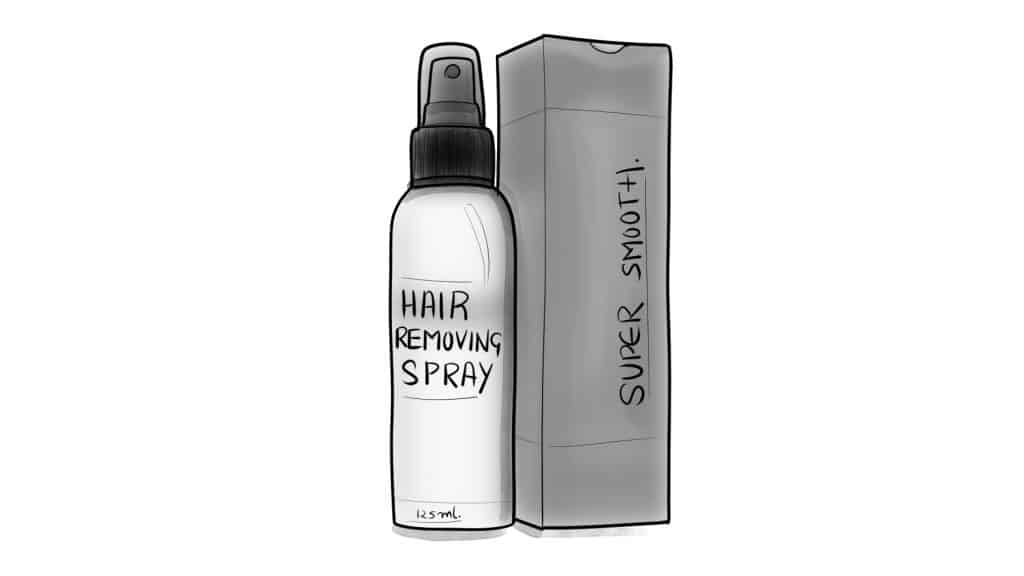
The advantage to using hair removal spray is that you don’t have to use your fingers or a spatula to apply it to the affected area. Instead, just hold the container approximately four inches from your body and spray an even layer over the unwanted hair.
Leave the spray on for four minutes – depending on the instructions – and then gently wipe it off with a damp washcloth. Once the hair is gone, rinse the area with lukewarm water.
3. Using a back shaver

One of the nice things about a back shaver such as the baKblade is that it doesn’t require shaving cream. We do recommend that you dampen the area with water before you begin shaving and that you use a mirror as a guide.
Another key to using a back shaver is that you don’t apply excess pressure. Even if your back hair rivals that of a gorilla, just let the shaver do the work. Depending on your hair, you may not need to make multiple passes with the shaver.
4. Using an epilator
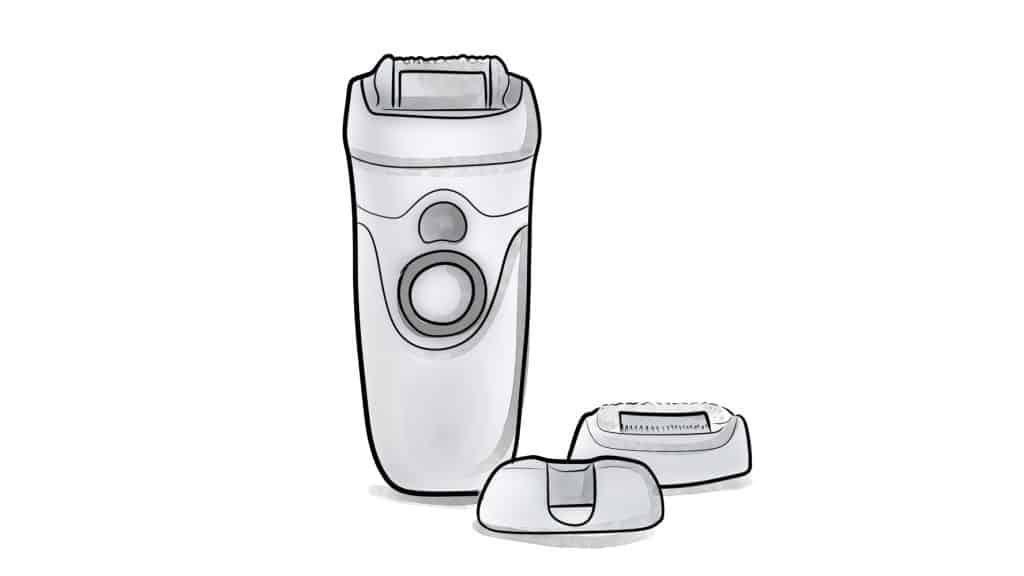
Things are a bit more complex when using an epilator, and you want to proceed carefully, because there is some pain involved. Desensitizing your skin with warm water always is helpful, as is exfoliating the skin within 24 hours of using your epilator.
It’s important to make sure that your skin is clean and free of excess oils.
It’s also better to epilate at night before you go to bed and apply a soothing, moisturizing cream to the area. Your skin will be soft and smooth when you awaken in the morning.
Here’s the recommended epilation process:
- You may choose dry or wet epilation, but most experts say that dry works best, because you won’t weigh down the hair with water, making it easier for your epilator to get all hairs. However, don’t hesitate to take a warm bath before you epilate, and, wet epilation is less painful and more convenient if you do it in the tub or shower.
- Use your epilator on a lower setting at the start, especially if you’re new to epilation.
- Keep your skin taut. Doing so helps your hairs stand up while also making sure you don’t pinch your skin.
- Keep the epilator at a 90-degree angle for best results.
- Go slow. Going too fast may cause you to miss hairs or not to pluck them by their roots, which means you have to repeat the process.
- Go against the grain (of the direction that your hair is growing). Be gentle, and don’t press down against the skin!
The many options for hair removal: A comparison
Cream, back shavers, spray, epilators, wax, razors, and so on – you have many choices regarding hair removal products. All of them are effective in their own way, but choosing the right one for you depends on many factors.
Let’s take a brief look at the seemingly endless list of ways (and products) with which you can remove unwanted body hair.
1. Cream & Spray
Depilatories – better known as hair removal creams – use chemicals to dissolve protein in the hair. The hair separates from the skin and is wiped off.
There are two big advantages to using creams: 1) they’re easy to use and 2) they work fast. With most creams, you need only to leave them on for four to five minutes before wiping them and unwanted hair away.
Moreover, their results last longer than methods such as shaving.
Because they contain chemicals, you need to be careful when using creams if you have sensitive skin. The good news is that many creams contain soothing ingredients such as aloe vera that is good for sensitive skin.
Creams are affordable, effective, and good for removing even the most coarse, thick hair.
Sprays are very much like creams in that they have similar ingredients and work in the same way: apply them to the affected area, let them sit for a few minutes, and then wipe them away. Their results, like creams, generally last up to a week or more.
Most users find spray more convenient in reaching hard-to-get areas of the body.
2. Razors & Shavers
We’ve talked about razors in many other posts but primarily regarding shaving your face. While it’s certainly acceptable to use a regular razor on another part of your body, the results aren’t as long-lasting as cream, spray, or other hair removal product.
One advantage to using a razor is that you have total control over the blade, and there’s less risk of something going wrong. You even can use a razor for shaving your genital area, but proceed with caution (a vast understatement, at that).
Of course, using a razor increases your risk of nicks and cuts and may cause skin irritation. Luckily, there are shave creams and soaps for every skin type.
Also, as mentioned, you’ll need to shave the area all over again in a few days – or more often, depending on how hairy you are.
Back shavers are convenient in that you don’t have the awkwardness of applying cream or spray on your back – or asking someone to do it for you. They come with long handles that enable you to shave even the hardest-to-reach sections of your back.
3. Epilators
Epilators are small electronic machines with spinning discs that grab hair and yank it out by the root.
True, it’s a process that’s not without a bit of pain, but a lot of guys swear by it. It takes some technique to get used to an epilator, so start off slowly, until you get the hang of it.
Epilator results are long-lasting, but an epilator tends to work better on longer hair and may leave stray hairs behind if your technique isn’t precise.
4. Waxing
Most of today’s waxes are made from soy and consist of a creamy lotion that’s applied to the skin. Strips of cloth are then layered over the mixture and pulled off once the solution is dry. And, just like that, your unwanted hair is gone for four to six weeks.
Wax is good for most areas of the body, including your genital region, but there is pain involved, for sure. If you’ve never tried waxing, we recommend having it done professionally before turning it into a DIY project.
5. Laser Hair Removal
Laser hair removal is about as permanent as it gets. Laser light energy kills the hair root to produce long-lasting results. The laser does not kill the hair follicle, however, so another hair could grow in its place, but that’s fairly uncommon.
A typical laser hair removal treatment lasts 30 minutes, and several treatments usually are required to provide a permanent solution. Another advantage to laser treatments is that they’re also good for thinning hair, rather than completely removing it.
The disadvantage of laser treatments? They’re expensive.
There are other means of hair removal, such electrolysis, threading, and sugaring, but we wanted to cover five main methods.
How we chose the best hair removal products for men
By now, you probably have a pretty good understanding that the business of hair removal resembles a wide-open frontier. With a multitude of products and methods to choose from, there’s undoubtedly a solution that suits you best.
In this post, we wanted to touch on a variety of products (with an emphasis on hair removal cream) that many users find effective. For many years – decades even – hair removal was directed primarily toward women, but these times are a-changin’.
We hope you find our list helpful and that it helps you to choose the right product.
We think those we listed above represent the best of the burgeoning men’s hair removal field.
Conclusion
That wraps up another best-of review, friends. As always, we encourage your feedback and comments. Is there a hair removal product that you’ve tried that’s not on our list? Or, have you tried one of those listed here?
We’d love to hear from you.