More than a fundamental component to a complete workout routine, the best shoulder exercises for men bring you one step closer to that desirable V-shape. Indeed, strengthening your delts gives the appearance of a slimmer waist while adding definition to your overall physique. Furthermore, studies have determined that the best shoulder exercises relieve pain and decrease the possibility of future dislocations. Of course, when all is said and done, you want a better body and that alone is enough reason to hop onboard.
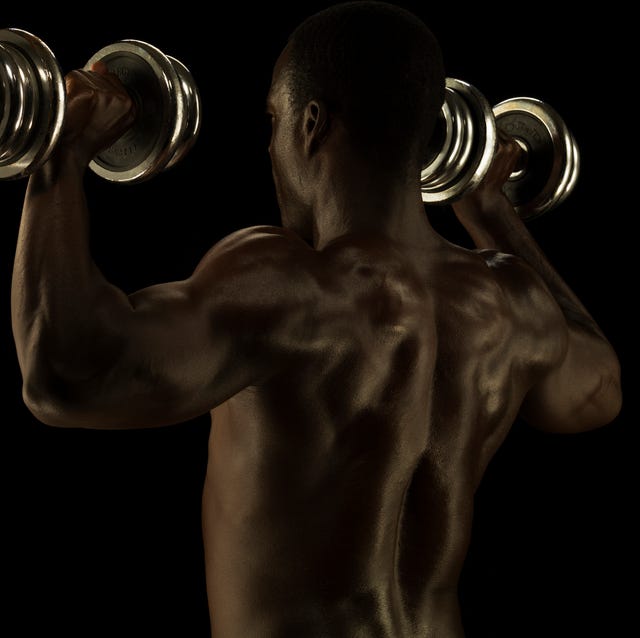
Broad shoulders are an attractive trait of the male physique. Building muscle in your shoulders is not only great for cutting a solid frame; it’s also practical. The shoulders are responsible for so much movement and weight-bearing in your upper body, that the stronger they are, the better.
The best way to maximize your workout is to make your muscles work to their full capacity. You should be taking them through their full range of motion, as well as a full stretch, at some point during your workout. This includes not only the deltoids but the entire shoulder region. Here we have enlisted some 7 best shoulder exercises for all the men.
7. Seated Dumbbell Shoulder Press
A proper deltoid workout simply isn’t complete without the seated dumbbell shoulder press. In fact, some say this exercise routine is an entire deltoid regimen unto itself, targeting the anterior, lateral, and posterior deltoid muscles (with an emphasis on the middle delts). Meanwhile, lifting two separate dumbbells (as opposed to using a machine) prevents you from using one side of your body over the other, thereby retaining firmer balance and distribution. Naturally, a fair amount of coordination is required to pull this one off, especially when you increase the weights.
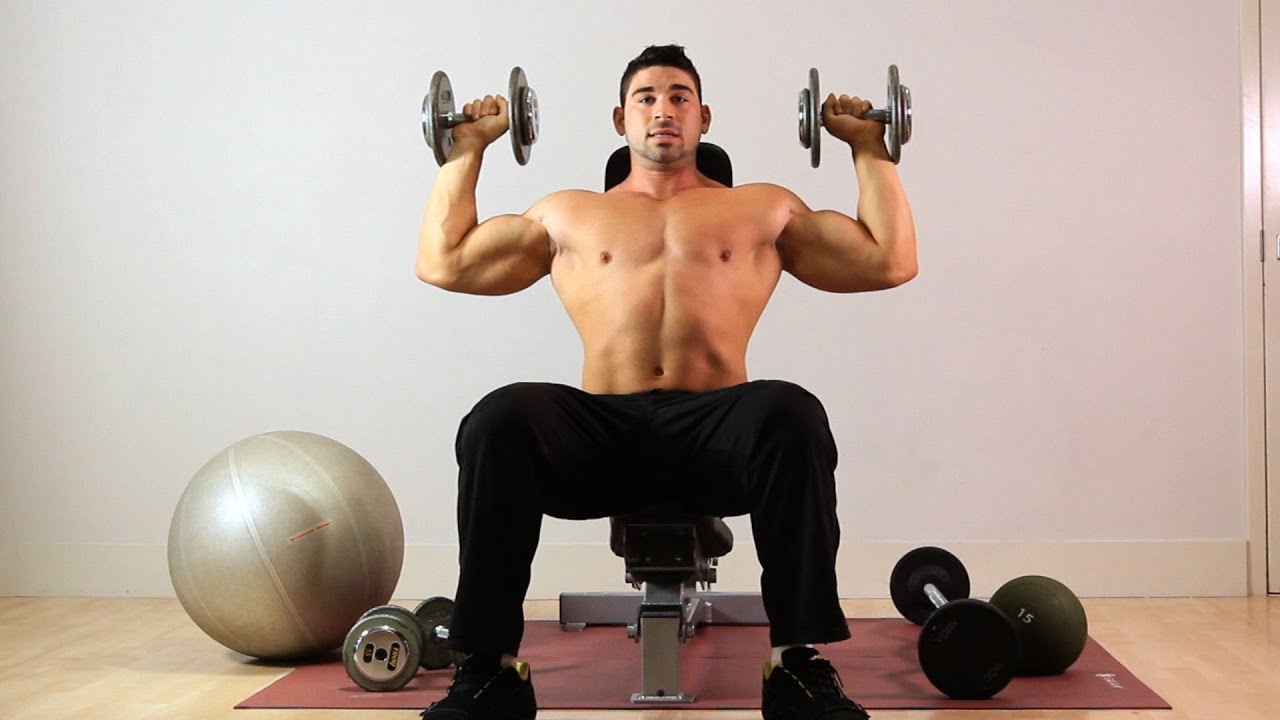
To perform a seated dumbbell shoulder press, sit on a low-back bench and hold a dumbbell in each hand at the shoulder level, palms facing forward. Keeping your head and spine perfectly straight, lift the dumbbells overhead toward one another, stopping just short of having them touch at the top. Hold the position for a few seconds and then carefully reverse course. Repeat.
6. Band Shoulder Press
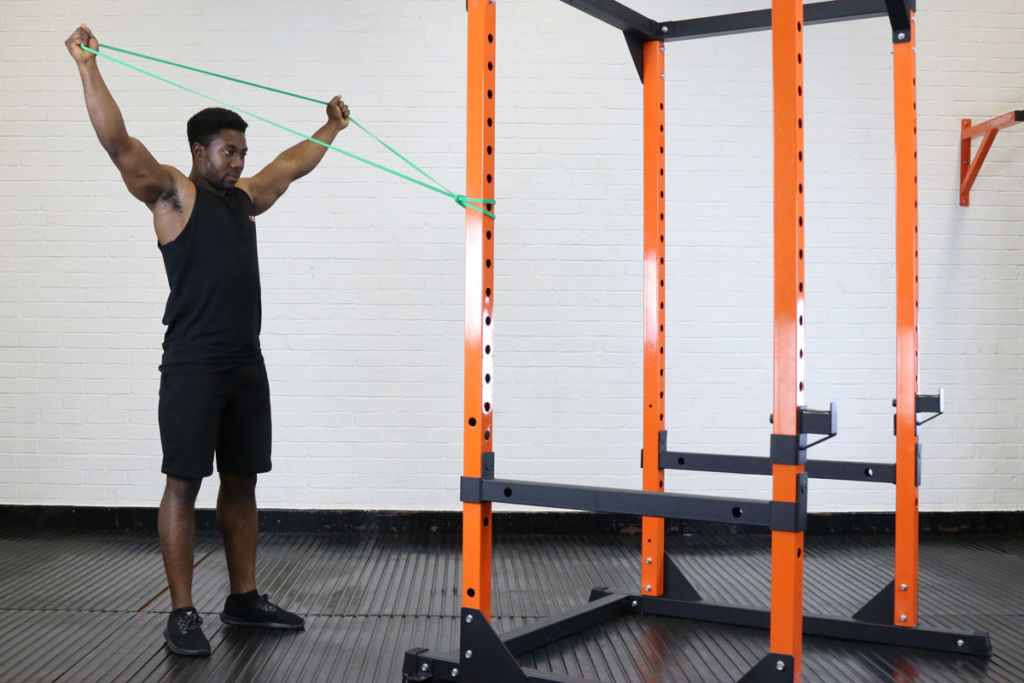
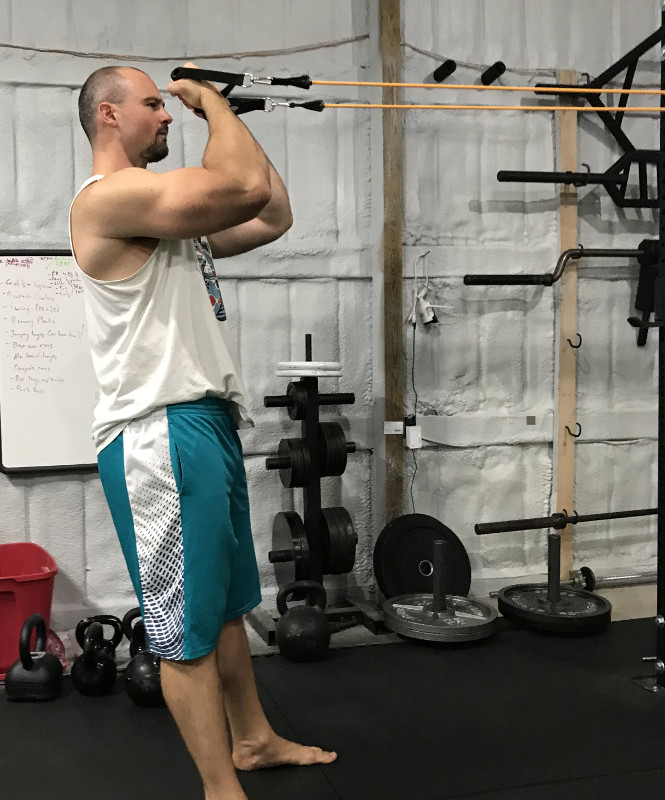
Rather than performing these overhead band presses by standing on the resistance band, you’ll be attaching them to a power rack pole. Doing this moves the resistance from the ground to the front, ensuring that you’re activating all of your shoulder muscles, including the rear deltoid and rotator cuff. This an effective starting exercise, as quality reps get you warm, and it engages all the muscles you’re going to be working out, ready for the heavier exercises.
How to perform
- Attach your resistance bands to your power rack at around chest height. Make sure they are secure.
- Keep your core engaged and torso slightly tilted back to make sure you’re not moving your arms behind your head.
- Hold the band shoulder high and slightly wider than shoulder-width.
- Push straight up until your arms are fully extended. You should feel muscle engagement at both the front and the back.
- Hold at the top for three seconds, repeating for two sets of 15 reps.
5 Barbell Overhead Shoulder Press
A barbell overhead shoulder press (aka barbell standing shoulder press) works not just your shoulders, but most of your body. That makes it a terrific core strengthener and mass builder, among other things. To start, put your feet at shoulder-width, and tighten your core as you hold a barbell at your shoulders, palms facing forward. Next, push the bar upward and squeeze your shoulder blades together at the peak. Lower steadily and carefully.

4. Cheat Lateral Dumbbell Raise
Similar to the previous three exercises, these next two also work together. Building muscle is not just about isolating certain areas, but getting everything to work together as one. After all, teamwork makes the dream work. As such, at least one component of your shoulder workout should have all your muscles working together. This combo of a cheat lateral raise followed immediately by a dumbbell push press will be that component. For the cheat lateral raise, you want to be using a heavier weight than you would use in a regular lateral raise.

How To Perform
- Position yourself into an athletic stance. Your feet will be wider than hip-width apart, knees bent but shins vertical, hips moved back, torso tilted forward, and your chest up.
- Start with the weight in your hand, arm in front of your body, elbow slightly bent.
- Accelerate the weight up and out to the side, quickly, but with control. Unlike a regular lateral dumbbell raise, for this exercise, you can allow your traps to assist.
- At the top of the move, your arm should be out to the side of your body, at shoulder height, elbow still slightly bent. Freeze the movement here for a moment.
- Lower the weight, with control, back to the starting position. If you can’t control the descent, you’ll need to swap to a lighter weight.
- While you can allow your traps to help, don’t get into too much of a swinging motion when you’re raising the weight. You want your muscles to be doing the work, not the movement.
- Once you’ve completed the set, move to the dumbbell push press, before returning for the next set.
3. Dumbbell Push Press
Immediately after your first set of cheat lateral dumbbell raises, move into your dumbbell push presses. Use the same weight as the raises, even though this might be heavier than usual.

How To Perform
- Keep your feet in the same position. However, you’ll want to straighten up from the athletic stance.
- Shift the weight up to your shoulder.
- Press the weight up above your head. Again, because this is a heavier weight, you’ll want to be pushing explosively. Use your whole body to help, including your hips and legs, slightly squatting when you push up. Just make sure your shoulders are still doing the lion’s share of work.
- Bring the weight back down to your shoulder with control.
- Once the set is complete, return to your next set of cheat lateral dumbbell raises.
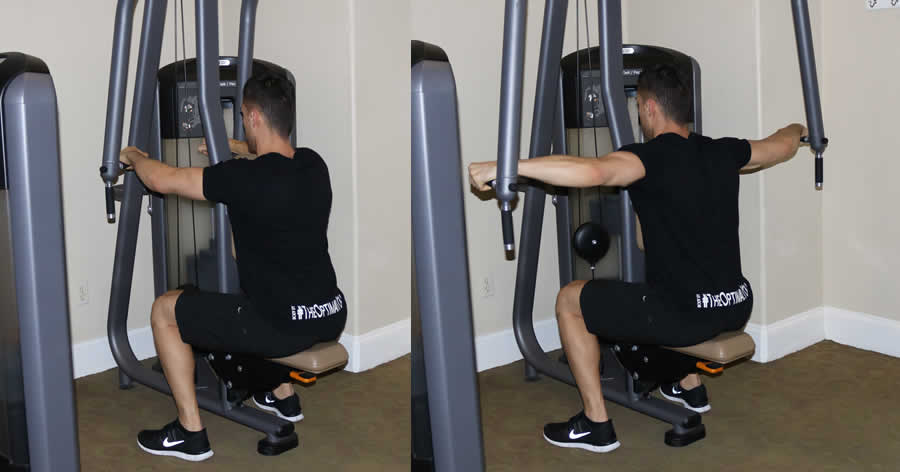
2. Reverse Pec Deck Fly
This exercise targets your posterior delts and requires a pec deck machine. To start, face the machine, and position the seat so that the handles are at shoulder level on either side. Next, hold the handles with your palms facing inward. Tighten your torso and extend your arms out to the side, pushing through all the way. Responsibly return to the starting position. Repeat.
1. Cable Rear Deltoid Raise
The next three exercises are the same, however each target the three different heads of the deltoid. As such, the movements are very similar, but the position of your body will change. These should be performed as a tri-set, completing three sets on each head before moving on to the next. These raises should include a full contraction and extension of the muscle to work it through its full range of motion. Perform these rear to front to accommodate for fatigue.

How To Perform
- Stand with a split stance. You’ll want the cable pulling across the front of your body, from the opposite side to the one you’re working.
- Tilt your torso forward at the hips, keeping your back straight and core engaged.
- Holding the cable, you’ll want your arm mostly straight across the front of your body.
- Pull the cable back across your body. As you hit the top of the move, your elbow should be bent, and your arm pulled back as far as your body allows. You should feel a full contraction in your rear deltoid.
- Release the cable back across your body, with control. At the bottom of this move, your arm should be extended across your torso, and you should feel a stretch along the back of your deltoid.