Yoga is a group of physical, mental, and spiritual practices or disciplines which originated in ancient India. A set of specific exercises, called poses, combined with specific breathing techniques and meditation principles are the building blocks of a yoga class. Stress and anxiety are the common problems people are facing which are affecting people’s mental health a lot.
On an actual level yoga gives us an opportunity to stop, breath and be completely at the time (regardless of whether the second is a battle of extending!). On an otherworldly plane, it by one way or another associates us to that more profound energy. It interfaces our brain and body through breath and being available. Yet, the best piece of yoga is each insight, each yoga succession, while the equivalent, is capable diversely for everybody.
Circumstances can be difficult and going to Yoga is an extraordinary method to dive further and simultaneously experience some alleviation during scenes of gloom and tension.
BUTTERFLY POSE (Baddha Konasana)

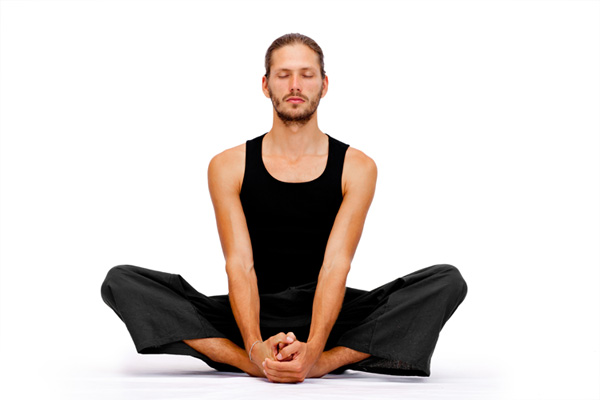
If you’re looking for a relatively simple posture that grounds you in the moment when you’re feeling anxious, then try Butterly Pose.
With a focus on your breathing, yogis feel the pose encourages internal reflection.
Butterfly Pose also combines the healing powers of meditation, as the pose encourages you to enter a meditative state.
Practice the butterfly pose regularly, and you’ll see your headaches vanish in no time! It also helps to relieve tension from your neck and head. Try and pay attention to your breathing pattern: it’ll help you calm your mind and reduce anxiety!
HOW TO DO:
- Sit with your spine erect and legs spread straight out.
- Now bend your knees and bring your feet towards the pelvis. The soles of your feet should touch each other.
- Grab your feet tightly with your hands. You may place the hands underneath the feet for support.
- Make an effort to bring the heels as close to the genitals as possible.
- Take a deep breath in. Breathing out, press the thighs and knees downward towards the floor. Make a gentle effort to keep pressing them downward.
- Now start flapping both the legs up and down like the wings of a butterfly. Start slow and gradually increase the speed. Keep breathing normally throughout.
- Fly higher and higher, as fast as you comfortably can. Slow down and then stop. Take a deep breath in and as you exhale, bend forward, keeping the chin up and spine erect.
- Press your elbows on the thighs or on the knees, pushing the knees and thighs closer to the floor.
- Feel the stretch in the inner thighs and take long, deep breaths, relaxing the muscles more and more.
- Take a deep breath in and bring the torso up.
- As you exhale, gently release the posture. Straighten the legs out in front of you and relax.
Bridge Pose (Setu Bandha Sarvangasana)

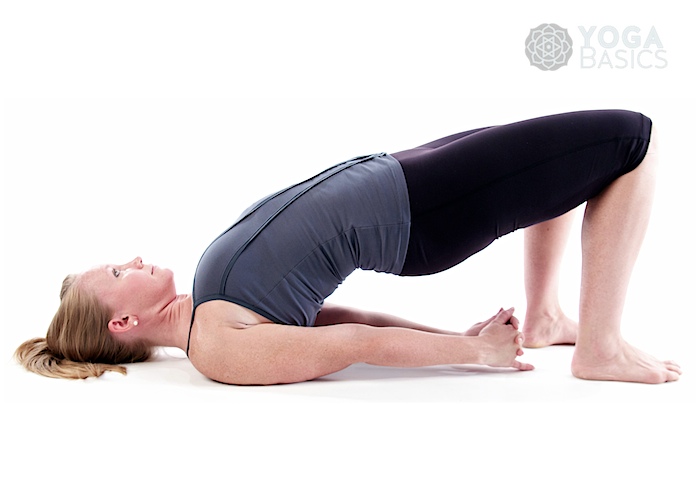
Bridge Pose is a powerful inversion that yogis believe opens up space around your heart.
By doing this it’s believed that it allows more space for you to focus and think more clearly.
Inversion poses generally can be helpful for those with anxiety. Inversions are enormously beneficial to the nervous system. Having the head below the heart is soothing and cooling for the nervous system and is wonderful for toning down stress.
HOW TO DO:
- Lying on your back, place your feet flat on the floor, a comfortable distance away from the hips.
- Place your arms next to the ribcage.
- You can either bend your elbows 90 degrees so that your fingers are pointing to the ceiling or hold onto the outer edges of your mat.
- On an inhalation, press the back of your shoulders and your feet into the floor and lift your hips up.
- Press the inner feet down actively and keep the knees from spreading out wide, by engaging the inner thighs.
- Lengthen your tailbone, slide your shoulder blades down your back and keep your neck neutral.
- You can clasp your hands behind your back.
- Stay for 5 to 15 breaths.
- To come out of the pose, release the arms and roll your spine down on an out-breath
Beginners’ tips
- Take your time working on lifting up into Bridge with control. You might like to practise coming in and out of the pose a few times first before holding the pose for a few breaths.
- Pay close attention to your knees, don’t allow them to fall out wider than your feet as you rise upwards. If you find this happens you can squeeze a yoga block between your thighs as you come up.
Child’s Pose (Balasana)
Child’s Pose “provides a sense of calm and stability”, ideal if your anxiety is impacting on your sleep.


Avoid Child’s Pose if you have a knee injury. If you are pregnant, spread your legs wider and don’t press your stomach onto your thighs. If you have a shoulder injury, keeping your arms by your side will provide the most support. If you feel any pain, ease out of the pose.
HOW TO DO:
- Come to your hands and knees on the mat.
- Spread your knees as wide as your mat, keeping the tops of your feet on the floor with the big toes touching.
- Bring your belly to rest between your thighs and root your forehead to the floor. Relax the shoulders, jaw, and eyes. If it is not comfortable to place the forehead on the floor, rest it on a block or two stacked fists. There is an energy point at the center of the forehead in between the eyebrows that stimulates the vagus nerve and supports a “rest and digest” response. Finding a comfortable place for the forehead is key to gaining this soothing benefit.
- There are several possible arm variations. You can stretch your arms in front of you with the palms toward the floor or bring your arms back alongside your thighs with the palms facing upwards. These are the most common variations. But you can also stretch the arms forward with palms facing up for a shoulder release or try bending the elbows so that the palms touch and rest the thumbs at the back of the neck. In this position inch the elbows forward.
- Do whichever feel more comfortable for you. If you’ve been doing a lot of shoulder work, the second option feels nice.
- Stay as long as you like, eventually reconnecting with the steady inhales and exhales of your breath.
Your neck should stay in neutral position. If you find you are bending your neck, use a pillow, yoga block, or another prop to keep pressure off your neck.
Seated Forward Bend (Paschimottanasana)
We know yoga has a number of advantages for your mental health, thanks to its mindful movements. Seated Forward Bend is considered to be particularly good.


This posture can not only help to relieve feelings of anxiety and stress, but also deal with the associated symptoms such as tiredness and headaches.
It gives the whole back of your body a good stretch, from your calves to your hamstrings (back of the thighs) to your spine.
This pose stretches these areas and helps open up your hips. This stretch is excellent for runners who tend to have tight hamstrings. It is also considered to be a calming pose. It is said that this pose can help relieve stress and even improve your mood.
HOW TO DO:
- Begin by coming to sit in Staff Pose (Dandasana) with your legs straight in front of your body.
- Bring your arms straight out to the sides and up over your head, reaching toward the ceiling.
- Inhale and draw your spine up long.
- As you exhale, begin to come forward, hinging at your hips. Imagine your pelvis as a bowl of water that is tipping forward.
- On each inhale, lengthen your spine. You may come a bit out of your forward bend to do this.
- On each exhale, deepen into your forward bend. Imagine your belly coming to rest on your thighs, rather than your nose coming to your knees. This will help you keep your spine long.
- Keep the neck as the natural extension of your spine, neither cranking it to look up nor letting it go completely.
- When you have come to your full extension with the spine long, decide whether you want to stay here or let your spine round forward.
- Take hold of your ankles or shins, whichever you can reach. You can also use a strap around your feet. Keep your feet flexed strongly throughout.
Cow Pose (Bitilasana)
When you’re suffering with low mood or anxious thoughts it can be useful to connect to your breathing to help you feel calmer.
Cow Pose is typically practiced with Cat Pose, encouraging you to inhale and exhale, while awakening your spine.

HOW TO DO:
- Begin in a seated cross-legged position.
- Slide your knees toward your center line, stacking the right knee directly over the left. It may be helpful to come forward onto your hands and knees to do this. The right knee should be just in front of the left knee. Then separate your feet and come back to sit between them.
- Bring your left arm straight up toward the ceiling.
- Bend the left elbow, bringing the left hand to the back of your neck. You can use your right hand to gently shift the left elbow toward your midline.
- Lift the right arm out to the right side, bend the elbow, and bring the right arm up the center of the back.
- Clasp hands behind your back.
- Draw both elbows toward the center and keep your head from tilting forward by pressing the back of your head into your left arm. Breathe evenly.
- Release your arms on an inhale and try the pose with the left leg and right arm on top.
Be sure to keep your spine aligned rather than twisted. You should have a straight line from the top of your head to your tailbone. Avoid twisting to join your hands.
While your hands are clasped, do not stick your ribs out. Try to drop your tailbone to the floor and broaden your lower back instead. Also resist rounding your back and curving your chest inward. Spread your collarbones instead.
Cat Pose (Marjaryasana)
Cat Pose is typically practiced by going between Cat and Cow Pose to open up, then relax your back.

HOW TO DO:
- Start on your hands and knees (all fours) with knees under the hips and wrists under the shoulders or slightly forward
- Spread your fingers and press through the base of the fingers and the fingertips
- As you exhale, pull your belly in, lift your side waists, round your spine and release your head towards the floor
- Actively press the floor away and feel the stretch in the back body
- Inhale and come back into your neutral starting position.
- If you have a neck injury, keep your head in the neutral position
- If you have wrist or knee injuries you can substitute with a seated or lying down version
Corpse Pose (Savasana)
Most physical yoga sessions will end with the corpse pose. It might look like a simple practice however it can have a powerful effect.
Life can be exhausting when you live with anxiety, and it can drain you both physically and mentally.


Savasana allows your body and mind time to process what has happened during a yoga class. It provides a necessary counterpoint to the effort you put forth during asana practice. You may also practice Savasana at home before sleeping3 as a way to quiet your mind and get more restful sleep.
HOW TO DO:
- Lie down on your back.
- Separate your legs. Let go of holding your legs straight so that your feet can fall open to either side.4
- Bring your arms alongside your body, but slightly separated from your torso. Turn your palms to face upwards but don’t try to keep them open. Let the fingers curl in.
- Tuck your shoulder blades onto your back for support. This is a similar movement to tucking the shoulders under in Bridge Pose, but less intense.
- Once you have set up your limbs, release any effort from holding them in position. Relax your whole body, including your face. Let your body feel heavy.5
- Let your breathing occur naturally. If your mind wanders, you can bring your attention to your breath but try to just notice it, not deepen it.
- Stay for a minimum of five minutes. Ten minutes is better. If you are practicing at home, set an alarm so that you are not compelled to keep checking the time.
- To come out, first begin to the deepen your breath. Then begin to wiggle your fingers and toes6 , slowly reawakening your body.
- Stretch your arms overhead for a full body stretch from hands to feet.
- Bring your knees into your chest and roll over to one side, keeping your eyes closed. Use your bottom arm as a pillow while you rest in a fetal position7 for a few breaths.
- Using your hands for support, bring yourself back up into a sitting position.
That’s all for it..